Photography podcast – photography blog – Photography.ca
The city and the people working as one – NOT
November 2, 2009 on 11:01 am | In Opinion-personal-rant, Photographs | 2 CommentsEvery photographer has subject matter that interests them more than other subject matter. For me, what gets me going the most is fine art photography and portraiture. However…..every once in a while I’ll pull out my camera to shoot different subject matter. Gotta pay those bills. This morning however I pulled out my camera because I was simply pissed off at my city. Look at what they are doing with our recycling. Does THIS look like a recycling truck?

I love Montreal. I find the city VERY progressive, tolerant, fairly clean and great place to live. My wife and I love it here. We are community minded people who believe in the environment and we ALWAYS recycle as much as we can. We wash out containers and bottles and separate papers to make it easy for the recycling crew. We used to see our recycling going into a recycling truck, where it would get sorted on the spot. As far as I know, crunched up mixed recycling in a garbage truck is NOT recycling…it’s friggin’ garbage on its way to a landfill.
Does anyone know what is going on here? I mean as much as I love to do my part, I hate wasting my time, and I hate municipal bullcrap. If my recycling is going into a landfill, then why am I wasting my friggin’ time?
Tags: garbage, Montreal, photography, recycling
Is this shot considered cheating?
October 31, 2009 on 10:08 am | In Photography blog entries | 4 CommentsYou’ve just captured the most beautiful shot of a rare duck. Everything is perfect – the composition, the color balance, and the surroundings. So do you tell people that you captured this shot in a bird sanctuary?

Some people may argue that this shot is not justified because it was captured at a bird sanctuary – ‘cheating’ if you will. If a photographer gets a shot like this from a refuge, it’s far less of an achievement (because it’s easier) than it would be getting that shot in the bird’s natural surroundings.
On the flip side, others stand by the notion that being in a sanctuary/zoo does not guarantee great pictures. It just means better access and more opportunity to capture the beauty you are searching for. You certainly still need to have skills and a good eye.
So who wins this argument? You tell me! See what others are saying in our photography forum.
Tags: photography
73 – Landscape photography tips – improving boring landscapes
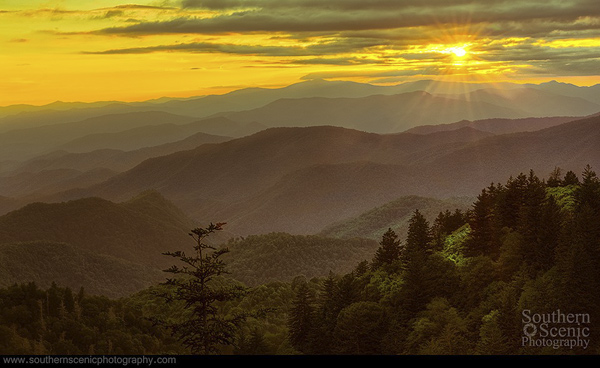
October 23, 2009 on 2:29 pm | In Photographs, Photography podcasts, Photography tips, podcasting | 4 CommentsPhotography podcast #73 is all about landscape photography and how to improve your landscape photography. Many newbies and advanced amateurs consistently wonder if their landscape photography is any good. This podcast offers up a fair pile of tips to help get your landscape photography to the next level. Some of the things we talk about include; lighting for landscapes, the background and the foreground, what makes landscapes interesting, exposure and landscape photography, filters in landscape photography, tripods and post production.

Yosemite Valley, Winter 1940 by Ansel Adams
Note the points of interest in the foreground, background and midground, note the full range of tones and note how skillfully our eyes are being guided. This is no accident, it’s the result of great planning (the light) execution (exposure/filters/composition) and finishing touches (darkroom post-processing – done these days using a graphics program).


Fishing spot by Kat
Kat has a great handle on the range of tones, exposure and composition here and I really like this shot. It’s missing just a little something of interest IMO to get the big “WOW!” Perhaps if a large rock was dropped in the midground with moving ripples that would have done it…. this shot is so close it just needs a hint of something “extra”.


Fly with me…across Australia (part of a series) by Mad Aussie
This one contains the “Wow!” factor for me. Great colour, range of tones, exposure and composition. Note the reflections in the foreground, the rocks in the midground and that awesome sky in the background. I love how the midground and background seem to meld into one another.
Links /resources mentioned in this podcast:
The Ansel Adams gallery
Darwin Wiggett – Fabulous landscapes
Rule of thirds podcast
Histogram podcast
October’s “Scary-Mysterious-Halloween” assignment on the Photography.ca forum
Please join the Photography.ca fan page on Facebook
My Facebook profile – Feel free to “friend” me
My Twitter page – I will follow you if you follow me (Hey that’s a Gabriel lyric) – Let’s connect
If you are still lurking on our forum,
feel free to join our friendly
Photography forum
Thanks to jacklabel, and Kent Wilson who posted a blog comment about our last podcast. Thanks as always to everyone that sent comments by email about our last podcast. Although ALL comments are appreciated, commenting directly in this blog is preferred. Thanks as well to all the new members of the bulletin board.
If you are looking at this material on any other site except Photography.ca – Please hop on over to the Photography.ca blog and podcast and get this and other photography info directly from the source. I Subscribe with iTunes I Subscribe via RSS feed I Subscribe with Google Reader I Subscribe for free to the Photography podcast – Photography.ca and get all the posts/podcasts by Email
You can download this photography podcast directly by clicking the preceding link or listen to it almost immediately with the embedded player below.
Podcast: Play in new window | Download
3 days left – Mois de la Photo – Montreal
October 8, 2009 on 4:21 pm | In Photographs, Photography blog entries | 1 CommentThere are only 3 days left to visit Le Mois de la Photo (Translation: photo month) in Montreal. Le Mois de la Photo is a photography event that takes place in Montreal every second year. I’ve been going to this event regularly in Montreal for about a decade. There is always a HUGE variety of photographic styles (from photographers from around the world) in this event and most exhibitions (especially this year) are what I would call ‘alternative’.

From Hand to Mouth, 1993. Installation view, The American Center, Paris, 1995. Photo: Jeff Guess. Courtesy of the artist
The above photograph (and this is one of the many exhibitions that I personally visited) is a great example of ‘alternative photography’ and thinking outside of the box. The goal of this exhibit is not simple, it requires thought; active thought. People will experience this exhibit in a personal way. Some will like it, some will hate it, and others will scratch their heads and go “Hmmmm”. Personally, I dug it big-time. I like things that are different. I like to think and feel. I’m not into McDonald’s and their freakishly annoying mainstream clown.
Here’s the ‘official website’ write-up on Guess’s exhibition:
With From Hand to Mouth (1993), a 22-metre long photographic series, Jeff Guess treats viewers to an original visual experience. The piece takes the form of a circular panorama hung from the ceiling of a darkened room. The artist assigns a particular place to viewers, who are invited to step into the centre of the installation. Without a privileged viewpoint that would make it possible to take in all the images at once, the work invites viewers to move about, to circulate. From Hand to Mouth is shown with a single, isolated photograph, Fonce Alphonse (1993).
This exhibition is just one of many that make up this year’s Mois de la photo. So get your shoes on and get out there this weekend to see the work before the exhibition is over. Bring an open mind, your brain but leave your cash at home. The exhibitions and mental stimulation are free.
Tags: Le mois de la photo, mois de la photo, montreal photography, photography
Shedding Some Light into Dark Rooms
October 1, 2009 on 4:37 pm | In Photography blog entries, Photography tips | No CommentsWe’re in the digital age, so why mess with a good thing by setting up an ancient darkroom? Well, setting up a dark room offers so much ‘hands on’ knowledge; it’s far more practical for learning photographic printing than you may think. The principals and tools of Photoshop were partially based on how photographers worked in the darkroom. Curves, levels, cropping, sharpening, multiple exposure printing, dodging and burning are just some of the things photographers have been doing in darkrooms for generations.

Here’s 4 reasons why darkroom printing rocks;
1 – There’s that special ’something’ that comes from doing the majority of the work with your own hands. It is far more satisfying to produce a print in the darkroom than by pressing the print button on your printer. Ask any good darkroom printer that has done both, they’ll tell ya. It’s true that darkroom printing takes longer and its precision is less accurate than digital; and yet it’s still more satisfying.
2 – Since everybody is going digital your work will stand out if you stay traditional.
3- YOUR work will never be doomed to spending its life on a hard drive or on a few websites, you’ll always have beautiful prints to hold and show off.
4 – I have a sneaking suspicion that darkroom prints printed today will be more valuable than the same image printed digitally. Why? Because every darkroom print is somewhat unique and traditionally, unique items have more value than mass produced ones.
If you decide to set up a darkroom here’s a few things to be aware of. Before you start your darkroom make a floor plan of the room so you can more or less know how to layout the wet side and the dry side. Will you be processing b&w and/or color? Colour printing is more complex (and requires a different enlarger) than b/w printing so it’s probably best to start with black and white. A good exhaust system is highly recommended as the chemicals you’ll use (unless you buy a processing machine) are toxic.
What’s great to know is that because everybody and their uncle has gone digital, there are amazing deals on used darkroom equipment. Ebay is your friend!So get your feet wet! Enjoy a getaway from the digital everyday…More on darkrooms here in our photography forum
Underdog photo exhibition – Montreal
September 26, 2009 on 10:42 am | In Photographs, Photography blog entries | No CommentsYesterday I went to see the Underdog photography exhibition in Montreal. It’s a gallery specifically opened to sell beautiful prints of shelter dogs AND have dogs there at the gallery (from shelters across Montreal) that are available for adoption. The photographs are by photographer Jaime LeBlanc and they are well done indeed. All the money from the sale of the images goes to shelters. This image was taken at the exhibition yesterday with my cameraphone.
Today was supposed to be the last day until 7pm at 4922 Sherbrooke W. (514) 969 3376
BUT the response has been so amazing that they are continuing the exhibition for a short while.
Tags: dog photography, underdog
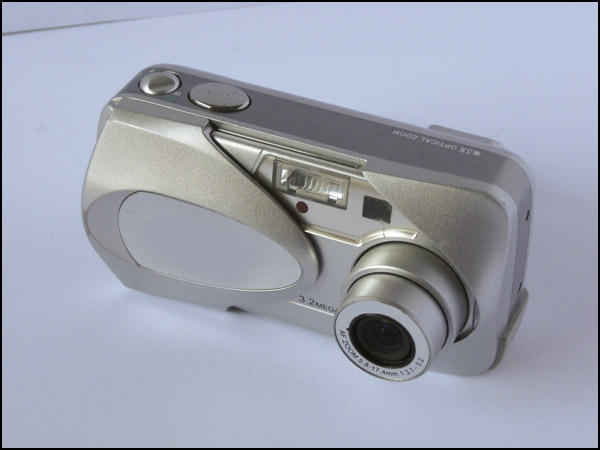
Point and Shoot cameras are good
September 26, 2009 on 1:13 am | In Photography blog entries, Photography tips | No CommentsSo you are into your DSLR or SLR, and cannot imagine using another camera… especially a point and shoot camera, right? Well they are often a good thing to have on hand in addition to your DSLR .

Point and shoots (P&S) aren’t ideal for learning photography. In fact they are a bad choice. Why? Because you can’t do many important things on most point and shoots (like change lenses, learn to manually focus a lens, manually meter easily, change shutter speeds easily etc.) that are essential when learning photography.
But – for someone that already knows photography, a point and shoot is very convenient due to its way smaller size. Many photographers want to have a camera with them at all times because there are always photographic possibilities around us.
Would I ever bring a point and shoot to a paying gig? Maybe as a 3rd emergency backup. The cliche about not bringing a knife to a gunfight holds true for paying gigs and cheap cameras. But when I’m not shooting, I want to relax without all the gear. I still need to carry protection (the P&S ) though, just in case.
Which point and shoot should you get? There’s way too many out there to list. One that I have my eye on that seems like it may be tasty treat is the Canon PowerShot G11. It’s supposed to be out in October. Buying/ordering through the B&H link above helps support the site. Thx.
Tags: point and shoot cameras
72 – Exposure compensation
September 22, 2009 on 4:41 pm | In Photography podcasts, Photography tips, podcasting | 6 CommentsPhotography podcast #72 discusses how to use exposure compensation. It’s a fairly simple concept that just means deviating away from (or compensating against) the camera meter’s recommended exposure to make the image brighter or darker. We also talk about which camera modes you’ll want to use exposure compensation with, and I discuss why program mode sucks and should be avoided. Even though exposure compensation in photography is an easy concept, I discuss the reasoning behind it, why I frequently use it and why you should too.

The exposure compensation dial on the Canon G10
Links /resources mentioned in this podcast:
Original suggestion thread from our forum – Thanks Iggy!
September’s “New Beginnings” assignment on the Photography.ca forum
Please join the Photography.ca fan page on Facebook
My Facebook profile – Feel free to “friend” me
My Twitter page – I will follow you if you follow me (Hey that’s a Gabriel lyric) – Let’s connect
If you are still lurking on our forum,
feel free to join our friendly
Photography forum
Thanks to Nijip, jacklabel, jabber and Tom Restis who posted a blog comment about our last podcast. Thanks as always to everyone that sent comments by email about our last podcast. Although ALL comments are appreciated, commenting directly in this blog is preferred. Thanks as well to all the new members of the bulletin board.
If you are looking at this material on any other site except Photography.ca – Please hop on over to the Photography.ca blog and podcast and get this and other photography info directly from the source. I Subscribe with iTunes I Subscribe via RSS feed I Subscribe with Google Reader I Subscribe for free to the Photography podcast – Photography.ca and get all the posts/podcasts by Email
You can download this photography podcast directly by clicking the preceding link or listen to it almost immediately with the embedded player below.
Podcast: Play in new window | Download

Tags: exposure compensation, photography
Photographing Tattoos – Tatoo photography
September 17, 2009 on 10:49 am | In Photography blog entries, Photography tips | 2 CommentsWe easily acquire tips to photograph flowers, people, and still life. Yet one subject that often doesn’t have clear cut tips and directions is photographing tattoos. This subject is art in itself, and to effectively shoot this piece requires not only patience and an eye for composition, but also tips from people that have already done it.

Tip one: Do not use a tripod unless you have a specific effect (e.g blur) in mind. It is likely going to limit your moving around and will take extra time to set up for each shot.
Tip two: If possible, shoot outside if you’re new to the game, or use great window light, it’s so much easier. Pay attention to clutter and distractions though. Be aware of what’s in the frame, what’s out of the frame, and make decisions on what to include or chop.
Tip Three: Easier light to handle might be around sunset time or on a cloudy day with diffused light. A reflector like white cardboard can help if needed.
Tip Four: If you already know how to work with flash and/or are comfortable with your technique, feel free to shoot in a tattoo shop if you get the permission. You’ll likely get cool effects if you try slower shutter speeds on their own and/or mixed with flash.
You can find loads of fine tattoo photography in the gallery at vanishingtatoo.com
Tags: photography, tatoo, tatoo photography
Portrait without a head
September 7, 2009 on 3:19 pm | In Photographs, Photography blog entries, Photography tips | 2 CommentsDo all portraits need a head or is it okay to frame or crop a photo so that it is headless? Most times I’d say, “for the love of God include the head”. Normally we connect with the subject of a portrait primarily by looking at the subject’s eyes, which reveal much about the person being photographed.

But….once you know the rules, you can try to break them to achieve a particular result. This image is a good example of a headless portrait that works IMO. If we try to analyze WHY it works, it works because the coupled elements tell a story. The Jake tattoo on the hand coupled with the suit, coupled with the Royal Monaco car actually tell a SPECIFIC story. These are all elements of the movie The Blues Brothers and both the photographer and I likely show our age by knowing this fact.
However, even if I did not catch the Blues Brothers connection, for me this shot still works. The elements are still there. The tattoo, older freckled skin, suit and older car all suggest a story. The fact that the shot is in black and white reinforce this fact. It’s up to the viewer to extract the story for themselves, but all the elements are there.
Okay then – do you agree? What do YOU think about this shot and the concept of a headless portrait?
Many thanks to 1putts of our photography forum for allowing me to use this image. Here’s the original photo.
Tags: photography portraits, portraits
The truth about polarizing filters
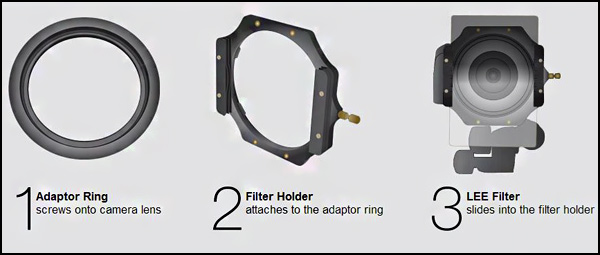
September 5, 2009 on 10:33 am | In Photography blog entries, Photography tips | 1 CommentThe truth about polarizing filters is that every photographer should have one in his/her bag at all times. It is possibly THE single most important and useful photo accessory you’ll own. When there is light outdoors, this filter is on my camera the vast majority of the time.

A CPOL (circular polarizing filter) can be used any time you’re in the outdoors, especially in the bright sun. It reduces reflections, and deepens/saturates colors like a blue sky. In bright sun, you’ll often get skies that are blown out if you don’t use this filter. It makes the sky much bluer and richer looking in many cases without really affecting the other tones in the image. You will note the greatest results when the sun is low in the sky (so early morning and later afternoon/evening). The CPOL will not help your color and saturation much on overcast days, or when the sun is high in the sky.
For more information on this amazing little gadget, including a little insight into the ‘rule of thumb’ when using a CPOL, visit this link on polarizers in our photography forum
Here’s a link from B&H where you can look at or purchase different polarizers.
Buying from this link helps support our site.
71 – Portable flash
August 31, 2009 on 5:03 pm | In Photography podcasts, Photography tips, podcasting | 10 CommentsPhotography podcast #71 discusses the principles of using a portable, external flash. We talk about how flash works, the different types of portable flash, on camera and off camera flash, using a portable flash as a main light source versus a fill light, bouncing the flash, sync speeds and more.

Depth of field guide
Links /resources mentioned in this podcast:
Podcast #33 – Studio lighting for beginners
Podcast #47 – Flash sync speeds
PocketWizard from B&H
Peanut slaves from B&H
August’s “Water” assignment on the Photography.ca forum
If you are still lurking on our forum,
feel free to join our friendly
Photography forum
Thanks as always to everyone that sent comments by email about our last podcast. Although ALL comments are appreciated, commenting directly in this blog is preferred. Thanks as well to all the new members of the bulletin board.
If you are looking at this material on any other site except Photography.ca – Please hop on over to the Photography.ca blog and podcast and get this and other photography info directly from the source. I Subscribe with iTunes I Subscribe via RSS feed I Subscribe with Google Reader I Subscribe for free to the Photography podcast – Photography.ca and get all the posts/podcasts by Email
You can download this photography podcast directly by clicking the preceding link or listen to it almost immediately with the embedded player below.
Podcast: Play in new window | Download
Powered by WordPress with Pool theme design by Borja Fernandez.
Entries and comments feeds.
Valid XHTML and CSS. ^Top^