Loading

Painting with light

LIGHT PAINTING
Light painting has actually nothing to do with ‘painting’ per say, but rather is an artistic form of photography. To go about it, choose a subject to shoot, turn off the lights, and while holding your light source, move it around. Playing around with‚your shutter speed will affect the outcome of the shot; a good shutter speed for this type of artistic imagery is 20-30 seconds.

Image by Marko Kulik

Image by Marko Kulik

This is a fun way to experiment with your camera and lighting, and can produce some fabulous results. Best thing? You don’t need to have much‚patience for it! 20-30 minutes is all you need and you’ll get a nice handful of shots.‚Nice idea when doing this type of exercise is to wear black clothing… otherwise you may become the focal point of your shoot!

For some tips and examples check the link in our photography forum
You can also take a listen to our painting with light podcast
69 – Street photography tips

Photography podcast #69 discusses street photography; what gear to use, what to shoot, how to shoot, should I ask the subject’s permission before I shoot etc. This topic was suggested by TJD of our photography forum, so many thanks TJD! One thing I forgot to mention during the podcast concerns model releases. If you never plan to sell the image, in Canada and the U.S. at least, you probably (I’m not a lawyer so this advice is worth what you paid for it as opposed to 2oo bucks an hour) don’t need one. If you plan to sell the images you shoot, then it makes good sense to bring a release form with you.

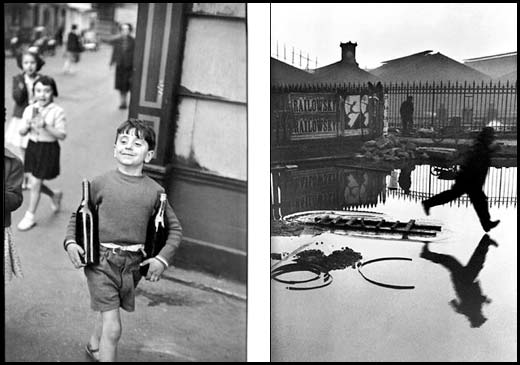
Street photography by Henri Cartier Bresson

Rue Mouffetard, Paris and Behind the Gare St. Lazare, Paris by Henri Cartier-Bresson

Links /resources mentioned in this podcast:
Henri Cartier-Bresson
Robert Doisneau

July’s Heat” assignment on the Photography.ca forum

If you are still lurking on our forum,
feel free to join our friendly :) Photography forum

Thanks as always to everyone that sent comments by email about our last podcast. Although ALL comments are appreciated, commenting directly in this blog is preferred. Thanks as well to all the new members of the bulletin board.

If you are looking at this material on any other site except Photography.ca – Please hop on over to the Photography.ca blog and podcast and get this and other photography info directly from the source. I Subscribe with iTunes I Subscribe via RSS feed I Subscribe with Google Reader I Subscribe for free to the Photography podcast – Photography.ca and get all the posts/podcasts by Email
You can download this photography podcast directly by clicking the preceding link or listen to it almost immediately with the embedded player below.

Memory Cards

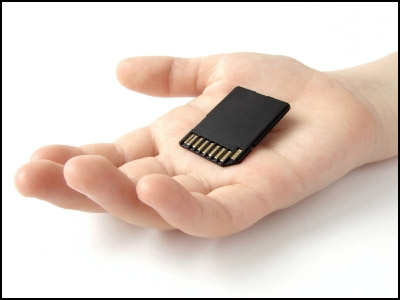
Let’s talk memory cards. More specifically memory cards with higher writing speeds, quality, and size. Higher writing speeds are a definite asset when shooting things like weddings, little league games and dance recitals – anything that requires you to shoot long bursts of shots. Higher writing speeds are also useful when the card is full and you need to transfer the images to a computer as quickly as possible via a card reader.

Quality is certainly not compromised whether or not you purchase a ‘brand name’ versus a ‘no name’ memory card – if the card works, chances are you have purchased a fine card which will hold those priceless moments for you.

And what about size… does it really matter? 2GB, 4GB, 8GB… it’s all a matter of preference. But a great tip for those who shoot events would be to buy a few smaller memory cards (4 GB) in case something ‘should’ happen to one card, you know you have a few other cards that your shots are on. Now that’s safe thinking! FORUM LINK:‚ http://www.photography.ca/Forums/showthread.php?t=2522

How Important are External Flashes?

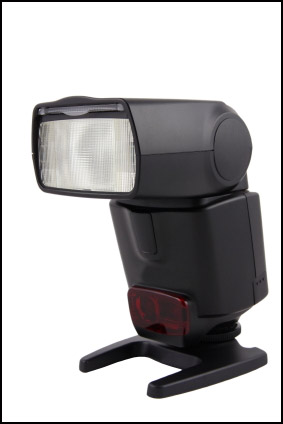
External Flashes have many advantages over on-camera flashes; not only is an external flash much more powerful than a small‚on-camera flash, but it also has a tilt-able head so that you can bounce it. Bouncing a flash is a great way to soften the light since direct flash is quite harsh.

An external flash gives you far more control over how you want the scene lit – the built in flash on your camera is usually only good enough to light a subject from a short distance and the light from the flash can only be used from one plane. This is another area where an external flash shines :)

External flashes can be taken off camera. This allows the photographer to creatively light a subject from different angles. You’ll need a way to trigger the flash and there are several good methods depending on your budget. The cheapest way (20 bucks or less) is with a sync cord but a better way is a wireless triggering system like the Pocket Wizard.

So if your budget can cope, an external flash is a prime investment and a stepping stone to getting you closer to the ‘advanced photographer’ status. For additional info check this link from our photography forum.

Lenses not making your image sharp? Think again.

Lenses are one of the most important components of your camera in terms of getting crisp and clear images. The lens does all the focusing, so the better the lens, the better the photograph (especially when making enlargements). However, there are other elements responsible for the sharpness of your images. Before you blame an unsharp photograph on the lens, there a few other crucial things to consider. In fact I hate to say this but the vast majority of unsharp shots are the result of photographer error not a lemon lens.

Shutter speeds that are too slow for some shots such as moving targets, will not produce the sharpness you are looking for if you are looking to ‘freeze’ the action. Moving targets require faster shutter speeds. Generally though, for objects that are not moving, the rule of thumb is 1/focal length of the lens as the slowest shutter speed to use while hand holding a camera. This means that if you have a 200mm lens the SLOWEST handheld‚ shutter speed you need on any subject is 1/200. Choosing a speed slower than that introduces the photographer’s own movement into the image and sharpness is sacrificed. Generally following this rule will give you favorable results. Practicing at different shutter speeds will give you a good grasp on things; so practice, practice, practice. While you’re practicing, slap the lens on a tripod and shoot some text on a newspaper pasted to your wall at different apertures. Use a cable release. Now you can gauge the sharpness of that lens you were questioning!

For more info on this topic click the link to our Photography forum