Loading

Want a Higher ISO? Expect more Noise.

The boisterous general opinion on Higher ISOs is just that – noisy.

The higher the ISO when taking photographs with your SLR, the more noise it creates. So all of the efforts we make trying to tweak and adjust our cameras for that perfect lighting, counteracts with the clarity of the photograph.

Thus, here is our plea to the camera manufacturers: We have sufficient mega pixels, we certainly don’t need more (Since that is what seems camera manufacturers are giving us nowadays‚¦). Instead why not give us better low light/noise performance?

It should be noted that some photographers, especially fine art photographers, can use noise to their advantage in order to create a certain feel. For the most part though, most photographers hate noise.

Photography forum link: http://www.photography.ca/Forums/showthread.php?t=1916

A Mad Moment – Having Fun at Ph.ca – Mad Aussie

Gidday again to another little ‘Mad Moment’

Photography can be a daunting subject to learn, especially for those at the very beginning of the learning curve. Apertures, f-stops, depth of field, leading lines, negative space, ISO, modes, poses, panning, HDR, it just goes on and on. It can get a little frustrating at times I know.

But Photography.ca is about making learning easier, and, more importantly to me, making it more fun also! I don’t do too many things that I don’t find fun. And if it wasn’t fun at Photography.ca … I wouldn’t ‘do’ that either! If you’ve been listening to Marko’s podcasts then you’ll agree that they have a flavour, a feel, an energy, that just screams out “relax … sit down … enjoy! Eat me out of house and home just don’t kick my dog!!”‚ This is something I find lacking in most other podcasts on photography. I don’t fall asleep listening to Marko! :)

But are the forums here the same as most forums? Or do they also have a life of their own?
So many forums are uptight and so proper that you are afraid to slide into its cyber-lounge and kick your shoes off for fear of some forum cop running over, beating you with his forum truncheon, and reading you some forum riot act!

Well … polish up your funny bones, rub some moisturizer into your smiley muscles, and pull out your sense of‚ humour and stroke it awhile, cause here at Photography.ca we encourage some levity and joy. All we ask is that our members show respect to each other where appropriate and don’t stifle someone’s thread with jokes if they haven’t yet got the answers they seek.

So … Fun with Photography. There’s many ways to do this and, of course, these ways can vary person to person.

My ‘Mad Moment’ today will focus on simply looking for the levity in your photos and sharing those. You may have a photo that doesn’t really come up to any great technical level but it certainly has an amusement value.

The following thread links will show what I like to do with photos like this. Enjoy and we hope to see you join in and learn with us.

Forum Threads
Does my ass look big to you?

I Quit! Life’s Too Hard!

For Sale – Going Cheep

By Mad Aussie – Photography.ca blog contributor & forum member
www.astrovisual.com.au
www.astrovisualphotography.com.au
www.istockimages.com.au

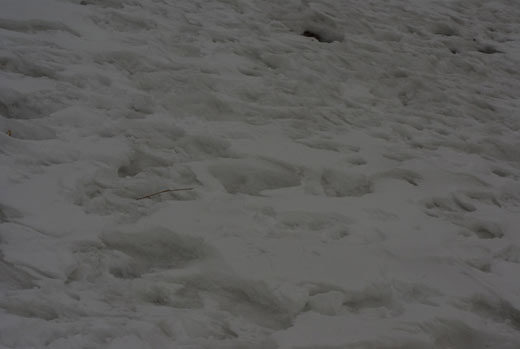
Why is the snow grey? What happened?

Thanks to casil403 of our photography forum for the use of these pics. So what happened here? Why is the snow grey when everyone knows that snow is white.

Basic exposure is a common area of confusion for newcomers in photography and these photos are PERFECT teaching tools.So what happened here? Why is the snow grey(ish) – after all, the photographer used a camera meter right?

Grey snow

Grey snow

Here is why this shot did not come out. This is textbook basic exposure and you NEED to understand this if you want the fog to lift and move up a level with your photography.‚ Here goes:

All a camera is, is hole with a flap over it. When the flap is lifted light hits film or a sensor. On modern cameras, depending on the setting you use, the camera’s meter suggests an exposure. This suggestion is good one in the following condition;

- When there is a good representation of light and dark tones. This is called a normal scene.

AT THIS POINT WE MUST SAY THAT THE CAMERA IS BLIND. IT DOES NOT KNOW WHAT IT IS LOOKING AT BECAUSE IT HAS NO BRAIN. ALL IT DOES IS AVERAGE OUT THE TONES IT SEES AND SPITS OUT AN EXPOSURE. ALTHOUGH THIS IS NOT INTUITIVE (FOR COLOUR PHOTOGRAPHY) THE COLOUR MID-GREY IS THAT MIDDLE TONE THAT THE CAMERA USES AS THE AVERAGE.

Since these shots above have a preponderance of white highly reflective snow and NOT enough other tones to balance out the scene, This is NOT a normal scene. The camera’s meter therefore, will NOT be accurate in cases like this (even if your camera costs 3,000‚ or 10,000 dollars) and if you use the camera’s meter reading in this case you will NEVER EVER get white snow. You have to make adjustments to the meter’s reading. This is why a monkey can take a picture, but not a good picture.

In this case, what the camera is doing is saying “Holy crap batman, look at all that white snow, it’s so bright; I better CUT the exposure to balance out the scene”. That’s what the meter does here – It tells the camera to cut the exposure and so it is too dark. To remedy this you need to give the scene MORE light by increasing the exposure by 1 to 2 stops.

The exact opposite is true as well. Let’s say you have a white dog on black pavement or just a shot of black pavement. In that case the camera’s meter will say “Holy crap batman, look at all that black pavement , it’s so dark; I better INCREASE the exposure to balance out the scene”. And in that case as well, the black pavement will look grey because the meter is trying to average out the tones in the scene toward mid-grey. To remedy this you need to give the scene LESS light by decreasing the exposure by 1 to 2 stops.

I hope that made sense. You can follow the whole thread (topic) here on our photography forum and read the advice of different members. If you still have questions, join for free and post in that thread (or start a new one). It’s our pleasure to help.

63 – Review of the Colormunki and the i1XTreme

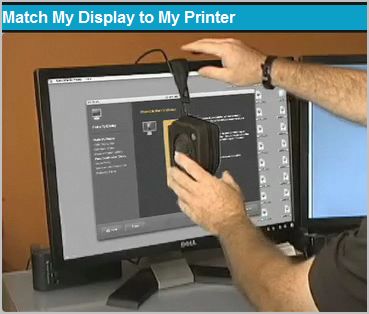
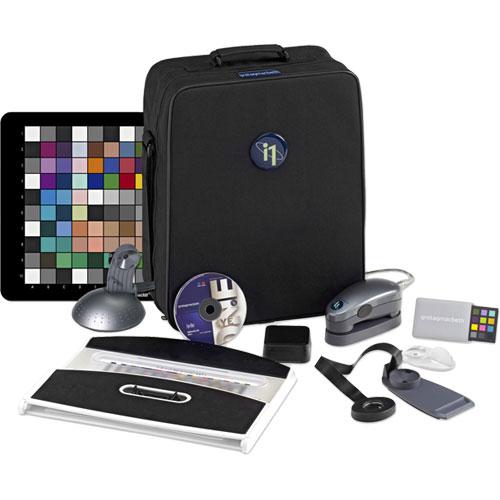
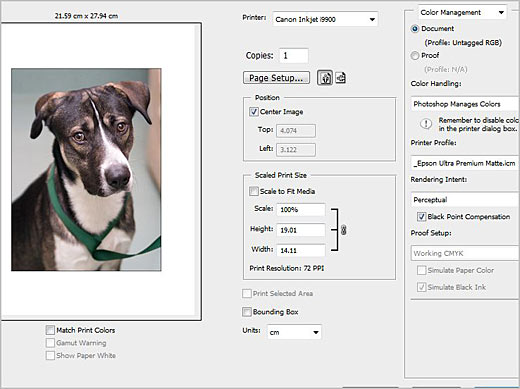
Photography podcast #63 features a review of the Colormunki and the i1XTreme monitor/printer/projector profiling systems. These are hardware systems that use a spectrophotometer to measure the color from hardware devices like monitors, printers, projectors (and in the case of the i1XTreme, scanners and cameras as well). So many of us are printing from our homes, offices or home-offices and we want accurate colours from our RGB or CMYK printers. These hardware devices absolutely simplify this extremely confusing process and both products come highly recommended. After the review, we ask Joe Brady of MACgroupUS in a telephone interview, to clarify what we need to do in Photoshop’s printing dialogue boxes to assure us of a good monitor to printer print. This is a common area of confusion for many photographers trying to print on their own printers.

UPDATE – In the podcast I say that the ColorMunki is restricted to use on 3 monitors. This restriction has been lifted.

The ColorMunki

The ColorMunki

i1Xtreme

i1Xtreme

Photoshops dialogue boxes

Photoshop's dialogue boxes

Links mentioned in this podcast:
colormunki
i1XTREME

ColorMunki summary tutorial on Youtube

X-rite Eye One ( i1 ) 1 of 2 – Monitor Setup from colorHQ.com
X-rite Eye One ( i1 ) 2 of 2 – Monitor Adjustments from colorHQ.com
Podcast #62 – Monitor – printer calibration (an introduction) – Interview with Joe Brady
Purchase the colorMunki at B&H – Purchase the i1XTreme at B&H (what I reviewed) Purchase the i1 Photo at B&H (a good alternative if you don’t need the extra bells and whistles).
Joe Brady Photography

Link I forgot to mention – Just like there are better monitors for photography, there are better printers with good print drivers that work well with the 2 systems reviewed in this podcast. 2 recommended printers Epson R1900 and Epson R2880 at B&H

If you are still lurking, feel free to join our friendly :) Photography forum

Thanks as always to Steven K, benny, Lovin and SuzieQ who posted a blog comment about our last podcast and to all the new members of the bulletin board.

If you are looking at this material on any other site except Photography.ca – Please hop on over to the Photography.ca blog and podcast and get this and other photography info directly from the source. I Subscribe with iTunes I Subscribe via RSS feed I Subscribe with Google Reader I Subscribe for free to the Photography podcast – Photography.ca and get all the posts/podcasts by Email
You can download this photography podcast directly by clicking the preceding link or listen to it almost immediately with the embedded player below.

Another 'Mad Moment' – Self Improvement – by Mad Aussie

G’day once more Photography.ca fans.

Another week flashes by, and the Photography.ca forums have hustled and bustled along quite nicely as usual lately. Lots of new people joining in the fun and learning which is great to see!

My ‘Mad Moment’ this time around is on ‘Self Improvement’ and we have two threads in the forum (one by raiven and one by Greg Nuspel) that discuss this subject. Do you go out to shoot a masterpiece but return with a piece of something else? Do you feel like you are doing everything you can to create a work of art and only end up with something that rhymes with art? Yeh, we all do that sometimes.

So then, how do you go about lifting your photography skills? Are there regular ways and techniques one might apply to their weekly photography that might advance their skills? Can you produce better images on a more regular basis? Well, quite a few of the Photography.ca members seem to have various ideas on this subject so follow the two links below to read about how you can learn from them.

Even better, join the forums if you haven’t already and explore ALL the ways you can learn interactively with Marko and the Photography.ca members.

Forum Threads
Improving One’s Photography
Self Improvement Assignments

By Mad Aussie – Photography.ca blog contributor & forum member
www.astrovisual.com.au
www.astrovisualphotography.com.au
www.istockimages.com.au

Another ‘Mad Moment’ – Self Improvement – by Mad Aussie

G’day once more Photography.ca fans.

Another week flashes by, and the Photography.ca forums have hustled and bustled along quite nicely as usual lately. Lots of new people joining in the fun and learning which is great to see!

My ‘Mad Moment’ this time around is on ‘Self Improvement’ and we have two threads in the forum (one by raiven and one by Greg Nuspel) that discuss this subject. Do you go out to shoot a masterpiece but return with a piece of something else? Do you feel like you are doing everything you can to create a work of art and only end up with something that rhymes with art? Yeh, we all do that sometimes.

So then, how do you go about lifting your photography skills? Are there regular ways and techniques one might apply to their weekly photography that might advance their skills? Can you produce better images on a more regular basis? Well, quite a few of the Photography.ca members seem to have various ideas on this subject so follow the two links below to read about how you can learn from them.

Even better, join the forums if you haven’t already and explore ALL the ways you can learn interactively with Marko and the Photography.ca members.

Forum Threads
Improving One’s Photography
Self Improvement Assignments

By Mad Aussie – Photography.ca blog contributor & forum member
www.astrovisual.com.au
www.astrovisualphotography.com.au
www.istockimages.com.au

Program modes – A 'Mad' Moment by Mad Aussie

Hello Photography.ca fans, members and lurkers.
Our forums here are a very constructive way to help move your photography forward in a positive manner and within the forums, blog entries and podcasts, you can find a variety of means to suit you and your current level of photography skill and interest.

A cool example of this, and my ‘moment’ for today is a thread in the forums which asks a question and the reason for why one answered as they did.

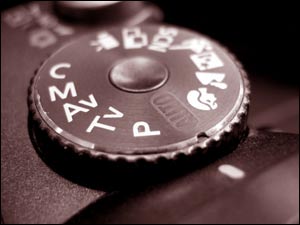
The question is ‘What Mode Do You Use?’

Many photographers ignore many of the options available to them and many of us are unaware of how some of these modes can benefit us in specific ways. Learning what modes people are using on their cameras and for what situations they employ these modes goes a long way to helping us understanding how we can benefit also.

To visit the thread of my ‘moment’ follow me HERE

Mad Aussie – Photography.ca blog contributor & forum member
www.astrovisual.com.au
www.astrovisualphotography.com.au
www.istockimages.com.au

Program modes – A ‘Mad’ Moment by Mad Aussie

Hello Photography.ca fans, members and lurkers.
Our forums here are a very constructive way to help move your photography forward in a positive manner and within the forums, blog entries and podcasts, you can find a variety of means to suit you and your current level of photography skill and interest.

A cool example of this, and my ‘moment’ for today is a thread in the forums which asks a question and the reason for why one answered as they did.

The question is ‘What Mode Do You Use?’

Many photographers ignore many of the options available to them and many of us are unaware of how some of these modes can benefit us in specific ways. Learning what modes people are using on their cameras and for what situations they employ these modes goes a long way to helping us understanding how we can benefit also.

To visit the thread of my ‘moment’ follow me HERE

Mad Aussie – Photography.ca blog contributor & forum member
www.astrovisual.com.au
www.astrovisualphotography.com.au
www.istockimages.com.au

Photography.ca winning member images

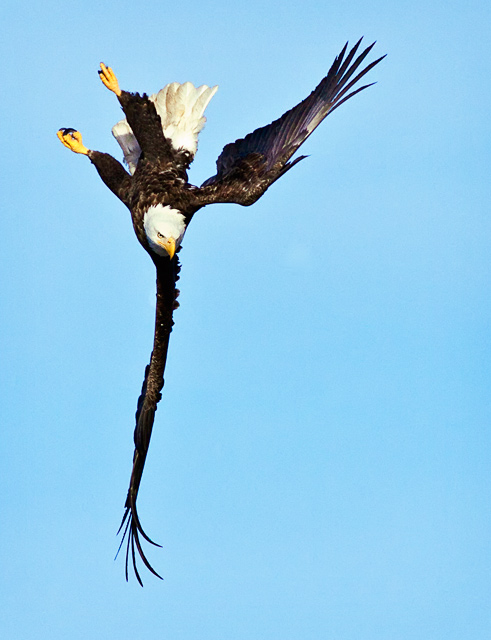
For the past 2 months we have added a new feature on our photography bulletin board where the Admin on Photography.ca (Me, Marko),‚ chooses 1 photo that he thinks is great and talks about the photo. The Eagle photo below by kentw was my choice for this month. (check the previous link for the explanation).

We have lots of photographs being submitted each month on our forum for critiques, assignments or just to show the photo. Choosing Kent’s photo as the ‘winner’ took about 3.5 hours of careful sifting. Given that it took so long to choose, I came across many many many close contenders. Seems like a waste of time just to include 1 photo so I’d like to include 3 honourable mentions right here.

If you haven’t joined our forum I would encourage you to do so. We are an extremely friendly bunch that share and learn daily.

Here’s the winning photo:

Eagles on the Mississippi by kentw

Eagles on the Mississippi by kentw

Here are the 3 honourable mentions:

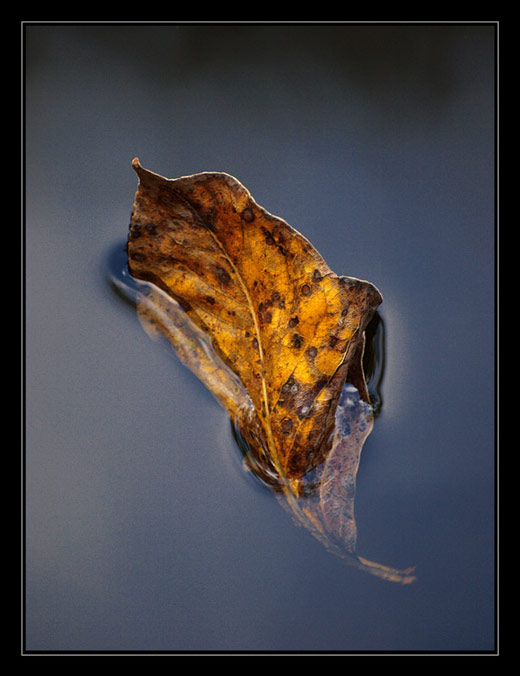
A leaf in water by Michaelaw

A leaf in water by Michaelaw

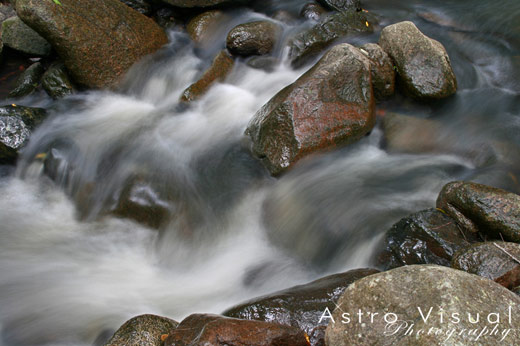
From Exploring b/w thread by Mad Aussie

From 'Exploring b/w thread' by Mad Aussie

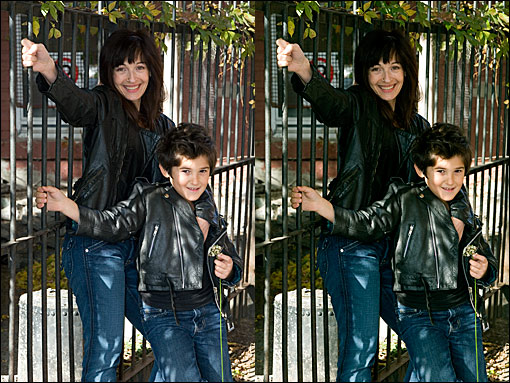
Shot of my dd...by ~Carla~

Shot of my dd...by ~Carla~

62 – Monitor – printer calibration – Interview with Joe Brady

Photography podcast #62 features an introduction into monitor calibration and profiling and printer calibration and profiling by way of an interview with Joe Brady of MACgroupUS. Joe clears up many common questions that we have when it comes to monitor profiling and tells us straight up why hardware devices that profile your monitor are vastly superior to the profiling software that comes with monitors. We talk about colour space, ICC profiles and how (unfortunately) the average photographer is using a bad monitor and a flawed workflow to proof their work. The next podcast will feature a full review of the colormunki and i1XTreme hardware profiling devices graciously loaned to me by MACgroupUS.

This image is just to illustrate a point. On the left is an image off of an UNcalibrated Eizo Monitor. On the right is that same image on a mid-range monitor that I thought was somewhat calibrated. Side by side you can see how the Eizo has a greater tonal range and less of a cast. The results are WAY more dramatic when you see the resulting prints with your eyes. When you actually calibrate and profile the monitor using quality calibration hardware, you get the best (or close to the best) result that the particular monitor can deliver. This usually translates to a wider tonal range with whites being whiter and blacks cast free as well, compared to the pre-calibrated monitor.

Links mentioned in this podcast:

colormunki
i1XTREME
colormunki training – Videos on using color munki along with color theory
Guess what it is thread

Assignments on our photography bulletin board:
March 2009 Photo Assignment – Wind
March 2009 – Assignment – photographing words – Wind

Thanks as always to Susan, Steven K, Jlabel, Kent Wilson and Tony who posted a blog comment about our last podcast and to all the new members of the bulletin board.

If you are looking at this material on any other site except Photography.ca – Please hop on over to the Photography.ca blog and podcast and get this and other photography info directly from the source. I Subscribe with iTunes I Subscribe via RSS feed I Subscribe with Google Reader I Subscribe for free to the Photography podcast – Photography.ca and get all the posts/podcasts by Email
You can download this photography podcast directly by clicking the preceding link or listen to it almost immediately with the embedded player below.